Introduction
The 1986 Jaguar XJ-SC V12 is a rare targa top cabriolet version of Jaguar’s XJ-S grand tourer, equipped with a 5.3-litre V12 engine. It represents a uniquely British blend of 1980s luxury and performance essentially a semi convertible GT that sits between the iconic E-Type roadster of the ’60s and the later full XJS convertible introduced in 1988. Initially overshadowed by its predecessor’s legend, the XJ-SC (launched 1983) has matured into a respected classic in its own right, offering “effortless performance, impressive refinement and a great all round driving experience”. This guide provides a UK-focused overview for prospective buyers from the rarity of right hand drive examples and purchase considerations to running costs, investment potential, and community support. Whether you’re a general enthusiast or a seasoned classic Jaguar aficionado, read on for detailed insights into owning an XJ-SC V12 in Britain.
RHD Rarity and UK Desirability
The XJ-SC cabriolet was produced in limited numbers, and right hand drive (RHD) versions are especially scarce. In total Jaguar built only 5,013 XJ-SC Cabriolets between 1982 and 1988, of which approximately 1,598 were RHD (the remainder left hand drive). This makes original UK market cars relatively rare. For a UK buyer, an RHD example is generally more desirable not just for authenticity, but for practicality on British roads (driving a left hand drive classic in the UK can be less convenient). The limited supply of RHD XJ-SCs means they attract strong interest from collectors locally. Furthermore, the XJ-SC was never as common as the standard XJ-S coupe or later full convertible, so any well-preserved RHD cabriolet stands out at shows.
In terms of desirability, a UK-spec RHD XJ-SC V12 is appealing for its home market heritage it’s the configuration Jaguar intended for Britain, with instruments in miles and a history likely tied to UK ownership. Collectors often favor such cars over reimported LHD counterparts. While LHD XJ-SCs (many sold in Europe and abroad) can sometimes be found at lower prices and converted to RHD, most buyers prefer an original RHD car to avoid the cost and complexity of conversion. Overall, if you find a genuine 1986 XJ-SC V12 in RHD, you’re looking at a relatively rare classic one of only a few hundred of that year that were built to UK specification which adds to its cachet in Britain.
Private vs. Dealer Purchases
When buying a classic XJ-SC, where you buy from is an important consideration:
-
Private Purchase: Buying privately (directly from the current owner) can often be cheaper, but it’s very much “buyer beware.” You’ll want to thoroughly inspect the car’s condition and verify its history. Always check that the seller has clear title and that there’s no outstanding finance on the car unlike a dealer, a private seller might not flag if a loan is attached to the vehicle (and any debt would become your responsibility). Examine the service records and MOT history closely, and consider having a pre purchase inspection by a Jaguar specialist. On the upside, private sellers (especially enthusiast owners) may have a detailed knowledge of the car, a trove of maintenance receipts, and a genuine reason for sale. You might find a well cared for example via Jaguar clubs or online forums. Just remember that with a private sale you won’t have legal consumer protections if something goes wrong “if you buy from a private seller, you miss out on key legal rights” that you’d have if buying from a trader. So due diligence is critical.
-
Dealer Purchase: Going through a classic car dealer or specialist generally means paying a bit more, but it can offer peace of mind. Reputable dealers often prepare the car for sale (servicing, MOT, addressing obvious faults) and may provide a short term warranty or guarantee. Consumer protection laws in the UK (Consumer Rights Act 2015) give you recourse if a dealer sold car is misrepresented or not of satisfactory quality rights you don’t get with a private sale. Dealers also typically ensure the car is HPI clear (no finance or theft record). Another benefit is their expertise: a good specialist will know common XJS issues and might have already sorted them or be transparent about any remaining needs. Of course, ask whether the dealer is selling the car on commission (sale or return) for a private owner or from their own stock, as that can affect your rights (if it’s a consignment sale, legally you could be buying from the owner via the dealer). A straightforward purchase from a dealer’s inventory is ideal for full protection.
-
Auction: Auctions are another route, sometimes offering good value, but they require confidence in what you’re buying. At auction, cars are typically sold as seen with limited comeback. For newcomers, private or dealer sales are usually safer.
Tip: No matter the source, verify that the VIN and engine number match the logbook (V5C) and that the car’s identity is correct. An 1986 XJ-SC should have a chassis number corresponding to that era’s sequence you can cross check known Jaguar archives or ask clubs for guidance. Also, ensure all the cabriolet-specific equipment is present: the two removable targa roof panels and the folding rear soft-top section (and if you’re lucky, an XJ-SC might come with the optional hardtop for the rear a desirable extra for weatherproofing in winter). Missing roof panels or trim can be hard to replace, so factor that into the purchase.
In summary, buying privately can yield a bargain but demands careful vetting, whereas buying from a dealer offers convenience and legal safeguards at a higher price. Decide based on your comfort level and the specific car’s condition and history.
Mechanical and Body Condition – What to Look For
Regardless of where you buy, assessing the XJ-SC’s condition is paramount. These Jaguars are robust in many ways, but age and inadequate care can introduce pitfalls. Here are key areas to examine:
-
Bodywork & Rust: The XJS of the 1980s is notorious for rust in certain spots. Inspect the underside thoroughly jacking points and floor pans are known weak areas (rust can cause holes or weakening around the jacking points). Press around those points and along the sills; crunching sounds or fresh underseal could hide issues. Check the front wings (fenders) down low where they meet the sills if the bottom of a wing isn’t flush with the sill, it may indicate previous rust repair or filler. The wing tops, headlight surrounds, and wheel arches (front and rear) often bubble with corrosion. Rear quarter panels, especially the lower edges in front of the rear wheels, also trap moisture if you don’t see a proper seam there, suspect it’s been filled over during a repair. Door bottoms and door frames can rust as well; open the doors and inspect the undersides and hinges. Rust is not a deal breaker if already repaired properly, but repairs can be expensive (for reference, new front wings cost on the order of £485 per side, plus paint/labour). If the floorpans or subframes are seriously corroded, you might be looking at a project best avoided unless you’re prepared for extensive body restoration. Note that post-1991 XJS models had some galvanisation which improved corrosion resistance, but an ’86 has no such factory galvanising so condition varies greatly by how it’s been stored and maintained. Try to inspect on a lift or at least get underneath with a flashlight. Avoid cars with structural rot in the chassis, as that can be financially ruinous to fix.
-
Convertible Top & Seals: As a cabriolet (XJ-SC), check the condition of the roof fabric on the rear section. Look for any tears, splits, or excessive wear in the folding soft top. Ensure the removable targa roof panels fit well and that their seals aren’t perished water leaks can result if seals around the targa panels or rear window are bad. If the car comes with a separate hard rear roof section (a rare hardtop accessory), inspect its fitment and latching. Replacing weather seals or repairing the canvas isn’t impossible (specialist trimmers can do it), but you’ll want to know in advance if it’s needed, as a new custom made hood could cost a few hundred pounds. Check carpets for dampness (especially behind the seats and in the boot); “damp carpets are a sure sign water is getting in” which can cause hidden rust or electrical issues.
-
Engine (5.3L V12): The V12 in the 1986 XJ-SC is the HE (High Efficiency) version, producing around 291 bhp. It’s famed for its smoothness and, if maintained, is actually very durable. Key is evidence of regular maintenance “lack of a service history or proof of maintenance should set alarm bells ringing”. A well kept V12 will idle nearly silently and pull strongly. When starting from cold, listen for any timing chain rattle at idle a brief rattle on startup can be normal on higher-mileage engines, but a continuous “loose timing chain rattle” indicates wear that will eventually need attention. Check the cooling system: the V12 runs hot and absolutely needs a clean cooling circuit. Coolant should be bright and clean (green or blue) if it’s rusty-brown, walk away or be prepared to overhaul the cooling system. Jaguar specialists recommend flushing and replacing coolant every 2 years to prevent radiator clogging. Watch the temperature gauge on a test drive: if it creeps past the midway in traffic, the car might be running hot (overheating can lead to costly engine damage). Common causes are silted radiators or failing thermostats/fans. During the test, also look for oil leaks around the cam covers and under the engine; some seepage is not unusual on an old V12, but large leaks need fixing (cam cover gaskets and other seals can leak with age). Misfires or uneven running can come from ignition problems the V12 has 12 spark plugs (which are awkward to access and often neglected) and a complex ignition system, so a slight hesitation under acceleration might be due to worn plugs, leads or coils. These are fixable, but you’d want to negotiate if you detect it. Overall, a healthy V12 is very refined it should not knock or smoke, and it should rev smoothly. If the engine feels rough or labored, there may be underlying issues.
-
Transmission: Nearly all V12 XJ-SCs came with the GM Turbo-Hydramatic 400 3 speed automatic gearbox (as was standard on XJ-S V12s of the era). This autobox is a strong unit. On the test drive, observe that shifts are smooth and timely. There should be no violent thumps or undue slipping between gears. Try the kickdown (flooring the throttle) the car should downshift promptly without hesitation. If you feel a “knocking from underneath” when shifting from drive to reverse or under acceleration, it could indicate worn gearbox mounts (not terribly expensive to replace). The TH400 transmission itself, if it ever needs a rebuild, can be handled by specialist automatic transmission shops since it’s a common GM unit. Note: A handful of XJ-SCs, particularly 3.6 litre six cylinder models, were manual, but a 1986 V12 will almost certainly be an automatic from new.
-
Suspension & Steering: The XJS has a fairly advanced independent suspension all around. Listen for any clunks or creaks over bumps front upper bushings often wear by 50k miles, which can cause vague steering and uneven tyre wear. It’s not unusual to have to renew those bushes; parts are available and a specialist can do it for a few hundred pounds. The power steering should be light but direct; check for leaks from the steering rack and hoses (look at the rack boots for signs of fluid). The XJ-SC V12 carries weight up front, so front springs and dampers should be in good order see if the car sits level and doesn’t wallow excessively. The rear suspension includes inboard brakes on pre 1993 cars and a Dana differential carried in a subframe. Rear hub bearings can wear (rock the rear wheels for play), and perished subframe mounts can cause a thud on takeoff (levering the subframe with the car supported can reveal loose mounts). Brakes are four-wheel discs and “relatively uncomplicated”. Just ensure it stops in a straight line and check that the discs aren’t badly scored or pads worn out brake servicing is routine. A sticking rear caliper on an XJS that’s been sitting is possible (feel if one rear wheel is hotter than the other after a drive, indicating a hung brake). None of these issues are deal breakers if caught, but they influence the cost of immediate repairs.
-
Electrics & Interior: Jaguar loaded the XJS with luxury features for its time, so make sure all the electrical items work. Test the power windows, mirrors, interior lights, and especially the power antenna (a common failure it should go up/down when the radio is toggled). Check that dash gauges read correctly and warning lights come on/go off as they should. Electrical gremlins can occur (aging Lucas wiring), but often it’s dirty connections or failed switches the enthusiast community and specialists can guide fixes. The interior trim in a 1986 model will have Connolly leather and wood veneers. Look at the condition of the leather seats (cracks or splits can be re-connolised or repaired by a trimmer). The wood veneer on the dash and console often shows cracked or flaking lacquer if neglected refinishing veneer is possible but can be pricey, so factor that if originality matters to you. Also check the headlining under the targa panels – saggy headliners are common on old Jags and not too expensive to fix, but worth noting. If the car has the tiny rear seats (most XJ-SCs were two seaters, but a few had dealer-fitted rear seats for insurance reasons), inspect their condition. In general, interior parts availability is fair but certain trim pieces (especially unique XJ-SC bits) may require sourcing used spares. For example, the unique rear quarter windows and targa panel latches should be intact; missing bits might mean scouring breaker yards or club spares.
In short, look for the most solid, well maintained example you can find. As Magneto Magazine advises, due to high running costs and years of low values, many XJS were not kept in top condition, so low mileage mint V12s are now rare and command strong prices it’s often wiser to buy the best you can afford than a needy project. A cheap XJ-SC that needs extensive rust repair and mechanical sorting can quickly outstrip its purchase price in restoration costs. It’s usually “financially unviable” to restore a very poor XJS unless you have deep pockets or personal attachment. Spend a bit more up front for a car with a sound body, good history, and cared for drivetrain it will be more enjoyable and likely cheaper in the long run.
Investment Appeal and Market Value Trends
For many years the XJS (including the XJ-SC) was an undervalued classic, but that has been changing. Recently, the model has seen a notable upsurge in values as demand from enthusiasts increases. The XJ-S is now recognized as a proper classic GT it may never have the sheer icon status (or price tag) of an E-Type, but collectors have “wised up” to its charms. In the words of the Jaguar Drivers’ Club, “interest in the XJS has revived” and its value as an exceptional grand tourer is finally being recognised.
Market Trends: Over the last 5-10 years, good XJS examples (especially V12s and special variants) have been climbing from bargain basement levels to respectable prices. According to data analysis by The Classic Valuer, an average condition Jaguar XJ-SC currently sits around £10,340 in value. This means the XJ-SC is still relatively affordable compared to many classic Jaguars in fact that figure is about £7k below the median Jaguar classic price overall but values are on the up. Top tier cars are commanding much more: the highest recorded sale of an XJ-SC so far was £27,000 (achieved at a UK auction in Aug 2022 for a particularly fine example). It’s not uncommon now to see asking prices in the £20k+ range for low mileage, mint condition V12 convertibles. By contrast, project or high mileage cars can still be found below £8k, but buyers are increasingly paying a premium for well preserved, low mileage cars, since as noted, those are “extremely rare” now.
Looking at classic car insurance valuations and guides: a “fair” driver quality XJS V12 coupe might be £11k, “good” around £18k, and “excellent” near £25k in the UK market (for late 80s/early 90s examples). The XJ-SC Cabriolet, being rarer, can track at or above these, particularly the V12. Notably, the full convertibles (1988-on) often attract a premium over the earlier targa-style XJ-SC, as many collectors prefer the look of the true convertible. However, the XJ-SC’s rarity gives it a niche appeal some enthusiasts specifically seek the targa models.
Investment Potential: Is the 1986 XJ-SC V12 a good investment? It can be. The car is on the cusp of full “classic” status in 2025/2026 it’s reaching 40 years old and values have been trending upward. Hagerty and other market watchers have repeatedly flagged the XJS as a “next big thing” classic. It’s often cited as one of the cheapest entry points into V12 classic car ownership, especially compared to Italian exotics or even Jaguar’s own E-Type V12. As E-Type prices have skyrocketed beyond many buyers’ reach, collectors have “moved in to fill the gap” with the XJS, recognising it as a posh yet affordable V12 GT. The XJS still hasn’t hit stratospheric prices, but that means there may be room to grow if demand continues. The limited production XJ-SC variant, in particular, has a certain collector cachet (only 5000 made, as noted). We have already seen “the best examples seeing an upsurge in values over the last few years”. If you buy a sorted example and keep it in great condition, it stands a good chance of appreciating further in the coming years, or at least holding its value while you enjoy it.
That said, don’t expect a sudden fortune this is still a car to be enjoyed for its own merits. High running costs and low initial values historically mean you should not count on making a profit after maintenance; rather, view any appreciation as a bonus. As Magneto magazine notes, due to those factors, it’s best to “go for the best XJS you can find,” because pouring money into a rough one for investment’s sake doesn’t usually pay off. The XJ-SC V12’s investment appeal lies in its enjoyment: it’s a rising classic that you can actually drive and relish a long-legged V12 cruiser while its value trajectory is upward. It also now enjoys eligibility for certain historic perks (discussed below) which enhance its practicality as a collectible.
In summary, the UK market for XJ-SC V12s is strengthening. Buy sensibly (condition is key), and you’ll have a classic that not only turns heads but could be a sound investment piece in the medium to long term.
Fuel Consumption and Economy (5.3-Litre V12)
There’s no escaping that a 5.3L Jaguar V12 is thirsty. In period, Jaguar mitigated the fuel thirst slightly with the “HE” (High Efficiency) engine design, but consumption is still in the low teens MPG. Expect fuel economy roughly around 15 mpg (Imperial) in mixed driving. Magneto magazine lists 15 mpg as the average economy for the 5.3 V12, versus about 25 mpg for the 3.6 AJ6 six-cylinder. Owners often report figures in the 12–18 mpg range, depending on conditions. Around town or driven hard, it could drop to 10 mpg or less; on a steady motorway cruise, you might see high teens. In a contemporary Jaguar brochure, it was claimed that the aerodynamic XJS and the high-efficiency V12 could deliver “competitive fuel economy in the region of 15 to 18 mpg”presumably under ideal steady-state conditions. Real world, mid teens is the realistic expectation.
For a modern comparison, 15 mpg Imperial is about 12.5 mpg US or 19 L/100km decidedly heavy by today’s standards. Fuel in the UK is expensive (and V-Power or super unleaded is recommended for older high compression engines to run their best), so petrol bills will be a significant part of ownership. That said, most XJ-SC owners don’t use these cars as daily transport. As a weekend or summer cruiser doing limited mileage, the fuel costs, while high per mile, often end up acceptable over the course of a year. You might do a few thousand miles annually in which case the smiles per gallon might outweigh the low miles per gallon.
Practical notes: The XJ-SC has a reasonably large fuel tank (over 70 litres), so fill ups will be costly but infrequent in casual use. It’s wise to budget for premium unleaded; although the 1986 V12 was designed during the shift from leaded fuel, by the mid-80s Jaguar’s V12 had hardened valve seats and should tolerate unleaded fuel (the “HE” may even prefer the higher octane). Some owners use additives or ethanol free fuel (E5 high-octane) to be kind to the fuel system. Because of fuel consumption, road trips will have you stopping often but on the flip side, the car was built for long grand touring journeys, so it’s very comfortable while you’re consuming that fuel.
In short, don’t expect frugality. The V12 drinks like, well, a V12. If fuel economy is a concern, the XJS was offered with a 6 cylinder engine that is far more efficient but then you’d miss out on the V12’s experience. Most owners happily accept the mpg in exchange for the buttery smooth 12-cylinder power and grand touring performance. Just go in knowing fuel will be one of your bigger running costs (aside from maintenance). As one UK Hagerty writer quipped: “If your wallet can bear the strain of fuelling the 5.3 litre V12 engine, it’s a beguiling choice” the pleasure of that engine can justify the fuel bills.
Parts Availability and Servicing Costs in the UK
One piece of good news for prospective owners is that parts availability for the XJS (1975 to 1996) is generally very good in the UK. Jaguar has an established heritage program and there are many specialist suppliers. Jaguar Land Rover Classic Parts themselves support the XJS: “Our extensive range of genuine parts includes everything you need to maintain or restore your XJS”, from engine components to trim. In effect, you can still source most mechanical and service parts either as new-old-stock, reproduction, or quality used parts. Major UK based Jaguar parts suppliers like SNG Barratt, SC Parts, David Manners, and Moss Europe stock a huge range of XJS items. Whether it’s filters, gaskets, suspension bushings, or even body panels, you’ll find them readily. Some niche parts (e.g. specific XJ-SC roof seals or interior trim pieces) might require hunting through club spares or second hand, but keeping an XJ-SC on the road is very feasible parts wise.
On the maintenance front, the XJ-SC V12 can be serviced by any competent classic friendly garage, but it’s wise to use a Jaguar specialist given the engine’s complexity. There are many independent Jaguar specialists across the UK familiar with the XJS. Routine servicing is not outrageously expensive, but note that some tasks cost more simply because it’s a V12 (e.g. 12 spark plugs, a large oil capacity, dual fuel filters, etc.). As a rough guide, one Jaguar independent (XJ Motor Services) lists typical service prices for an XJS V12: a basic 10,000-mile service around £140, interim services in the £200 to £300 range, and a major 60k service about £360. These figures might be a bit dated and likely before VAT, but they illustrate that regular servicing can be a few hundred pounds rather than thousands, if no big issues are found. A main Jaguar dealership would likely charge much more (if they’ll even work on a 1986 car), so specialists are the way to go for value.
Common maintenance expenses: An oil change (the V12 takes ~10 litres of oil) plus filter might be £100 to £150 at a specialist. A full ignition tune-up (12 plugs, distributor cap, leads) could be a couple hundred in parts plus labour. Coolant flush and fill, maybe £50 to £100. Brake pads and fluid change similarly. So standard upkeep is manageable. Where costs can escalate is if major components need overhaul e.g. rebuilding the V12’s fuel injection, replacing the radiator, suspension refresh, etc. But even these tasks are regularly done by specialists and parts are there (a new radiator might be £300; a re-cored radiator similar cost; a full set of shocks maybe £400). The labour on a V12 can add up because of how tightly packed the engine bay is (for instance, changing all 12 plugs is an involved job due to accessibility).
One must also consider the possibility of deferred maintenance: If the previous owner has skimped, you may face a backlog. Things like rear subframe mounts, differential seals, steering rack bushes none individually ruinous, but several medium jobs can add up. It’s wise to budget a contingency fund after purchase for catching up on any missed maintenance.
Reliability vs. maintenance: The Jaguar V12 is an impressive unit that, per experts, is “inherently reliable as long as its owner is fastidious with maintenance.” Regular fluid changes (oil, coolant, transmission) are key to longevity. If you keep on top of these, the engine can run for very high mileages. Many XJS owners report that when properly sorted, the car is reliable enough for long road trips and enjoyable use. However, an XJ-SC will never be as maintenance light as, say, an ’80s Mercedes. Part of the joy (and challenge) of ownership is preventative care. It’s a classic that responds well to being kept in fine fettle.
Costs Summary: As a classic car, the XJ-SC can be surprisingly reasonable to insure and exempt from some costs (see next section on tax/insurance), which offsets the higher fuel and servicing costs. Think of it this way, you might spend a few hundred a year on an annual service and MOT, plus the odd repair. Some years it’ll just be fluids and filters; other years you might need new brake calipers or fix an AC leak typical classic car things. Factor in an annual “maintenance kitty.” Many owners say the parts prices aren’t bad (thanks to Jaguar making a lot of XJSs in total and ongoing support), and a lot of fixes can be DIY if you’re handy, further saving money. If not, a good relationship with a specialist will keep the car sorted.
The bottom line is that owning a V12 Jaguar is not cheap, but it isn’t ruinous if you plan for it. Routine upkeep is predictable; the car’s complexity mostly means more frequency (12 of things instead of 4 or 8, etc.). One often heard phrase is “$#!^ happens by the dozen” meaning if a part fails, you might have to replace many (spark plugs, injectors, etc.) due to the cylinder count. But the joy of that silken V12 and the car’s presence makes it worth it for most enthusiasts. If you budget accordingly, the XJ-SC can be a rewarding classic to maintain in the UK’s thriving Jaguar scene.
Road Tax, MOT, and Insurance Factors (UK)
Road Tax (VED): A 1986 vehicle falls under the UK’s pre 2001 engine size based Vehicle Excise Duty system. That means if it’s not exempt as historic, the XJ-SC’s large engine (>1549cc) puts it in the top bracket. Currently, that’s about £270 per year for engines over 1.5L (as of 2020 rates; it may have increased slightly by 2025). So, expect on the order of £280 to £300 yearly if you have to tax it. However, there’s a major silver lining: historic vehicle exemption. The XJ-SC will become eligible for historic status once it’s 40 years old. The rule is a rolling 40-year date as of April 2025, vehicles built before 1 Jan 1985 are exempt, and by April 2026 those built before 1 Jan 1986 will be exempt. Since 1986 cars will qualify around 2026–2027, you are on the cusp of free road tax. When eligible, you can apply to change the tax class to “Historic Vehicle” and then VED costs £0 (you still have to go through the tax process each year, but it’s free). Many XJ-SCs will hit that mark soon great news for owners. Even before then, the £270 ish tax is not outrageous compared to modern cars’ tax (some high-emission newer cars pay £600+), but it’s a factor.
MOT: Along with tax, vehicles over 40 years old are MOT exempt in the UK (no annual MOT test required) although you can voluntarily get an MOT for peace of mind. A 1986 car in 2026 is just about reaching that threshold. Until it’s exempt, it will need an MOT yearly. Insurance companies often like to see a valid MOT regardless, and as an owner you likely want to know the car is roadworthy. If you do qualify for MOT exemption, it’s still wise to have the car checked or MOT’d periodically brakes, suspension, etc, for safety (some owners do an MOT test by choice even when not mandated). In short, MOT cost (£40-ish) is minor, but keeping the car in MOT worthy shape is important.
Insurance: Classic car insurance in the UK is typically very favorable for cars like the XJ-SC. Many insurers offer classic policies with limited mileage, which can result in much lower premiums than an equivalent modern car. It’s not uncommon to insure an XJS for a few hundred pounds or less per year if you: 1) keep it as a second car, 2) limit annual mileage (e.g. 3k or 5k miles/year), and 3) are over a certain age with a good driving record. Companies like Lancaster, Footman James, Hagerty, Classicline, etc., specialise in this. As Lancaster Insurance notes, “essential items like insurance can often attract lower premiums” for classics insurers recognise that classic owners take care of their cars and often drive them cautiously to shows, etc. You may also get discounts for belonging to an owners’ club (JEC or JDC, for example), and some policies might require club membership.
When insuring a classic, agreed value coverage is highly recommended. This is where you and the insurer agree on the car’s value (often you supply photos and details or a club valuation) so that in event of total loss you get that amount. Given XJ-SC values are rising, an agreed value protects you from normal insurer depreciation or low market assessments. Make sure to update the agreed value as needed to keep pace with the market. Insurance may also require the car to be garaged overnight for certain policies, especially in urban areas check requirements.
One factor to check is if the car has any modifications many classic policies allow mild mods, but significant deviations (e.g. an aftermarket fuel injection or a manual gearbox conversion on a V12) should be declared. Generally, a stock XJ-SC V12 poses no trouble to insure as a classic. Some owners under 25 or 30 might find fewer companies willing (classics often require 25+ years old drivers), but there are specialist young classic policies too.
Running costs summary: The combination of free road tax (once historic) and affordable classic insurance can make the XJ-SC’s annual overhead quite reasonable often much lower than a modern sports car’s tax and insurance. As one classic insurance provider puts it, classics can be “surprisingly economical” in these aspects, with road tax and MOT sometimes “non existent in some cases”. This offsets the fuel and maintenance costs. For example, you might pay £150/year insurance and £0 tax, which is far less than a modern equivalent would cost to keep on the road.
Finally, note that being a classic, the XJ-SC may qualify for London ULEZ exemption (vehicles with historic tax class are exempt from ultra-low emission zone charges) a consideration if you live in a city. And as a 1986 car, it’s eligible for classic car events, vintage rallies, etc, which often have benefits like lower entry fees or classic vehicle parking at shows.
Enthusiast Community and Events
Owning a Jaguar XJ-SC V12 in the UK means you’re never alone there is a strong enthusiast community to support you. Jaguar has some of the most active owners’ clubs and online forums in the classic car world, and the XJS is well represented.
Owners’ Clubs: The two major UK clubs are the Jaguar Enthusiasts’ Club (JEC) and the Jaguar Drivers’ Club (JDC). Both have dedicated XJS registers/groups within them. For instance, the JDC runs an XJS Register catering to all XJS variants (coupé, cabriolet, convertible), with a Register Chairman and events occasionally tailored to XJS owners. These clubs offer technical advice, magazines, parts discounts, insurance schemes, and local meetings. Membership typically is around £45 to £60 a year and is well worth it for the networking and knowledge. According to the JDC, interest in the XJS is definitely on the rise, and many previously neglected cars are now “being cherished” by enthusiast owners. The Jaguar Enthusiasts’ Club is similarly active they often have model-specific forums and the club’s magazine features members’ XJS stories. Both clubs organise national and regional events. For example, there might be an annual Jaguar Festival or gatherings at venues like Blenheim Palace, where hundreds of Jaguars (including many XJSs) meet. These are great for seeing other cars, finding parts, and socialising.
Forums & Online: If you prefer online community, there’s the popular JaguarForums.com and Jag lovers XJ-S forum, where owners worldwide (including many UK folks) discuss tech tips and share experiences. There’s also a dedicated XJS Club (xjsclub.org) with international membership that costs only a small fee for lifetime access. Social media has groups like “Jaguar XJS Appreciation Society” on Facebook and model-specific groups (even one just for XJS V12 owners). These can be invaluable for quick troubleshooting or sourcing a rare part from someone’s stash.
Events and Participation: As an XJ-SC owner, you can enjoy a variety of events:
-
Classic Car Shows: Many local and national classic car shows in the UK welcome 1980s classics. You might display your car at something like the NEC Classic Motor Show, or local summer fetes and meets. The XJS is now old enough to be a respected classic at these events.
-
Club Rallies: JEC and JDC host meets e.g. regional Sunday drives, meet ups at pubs, or stands at larger shows like the Silverstone Classic. Often, anniversaries are celebrated: 2025 marks the 50th anniversary of the XJS launch (1975), so expect clubs to commemorate that with special gatherings.
-
Driving Tours: Clubs and independent groups organize classic car tours (e.g. a weekend in the Cotswolds or a Scotland NC500 tour) and the XJ-SC, with its combination of open top motoring and luggage space, is an excellent candidate for touring with fellow enthusiasts.
-
Concours and Competition: If you are inclined, you can enter concours d’elegance competitions through clubs, where the best-kept Jaguars compete – a fun way to show off a pristine XJ-SC. There’s also historic motorsport while the XJ-SC itself didn’t race in period (the XJS coupe did, famously winning at Bathurst in racing form), you might still see racing XJS coupés in historic touring car events. Some owners even do classic rallying in these cars.
One thing you’ll find is that the Jaguar community is very welcoming. The XJS may have been undervalued in the past, but today it’s celebrated, and you’ll likely get plenty of admiration and questions when you take the car to events. Enthusiast clubs provide a knowledge base for maintenance tips, recommended suppliers, and moral support. Also, the clubs often have spares schemes or classifieds where members trade parts extremely useful for something like finding an original set of alloy wheels or that missing targa panel bag.
Being involved in the community can greatly enhance your ownership: you learn more about the car, you have backup when troubleshooting issues, and you make friends who share your passion. Plus, when it comes time to possibly sell, a car known in the club circuit with a good reputation often finds a buyer more easily.
Comparisons and Final Thoughts
It’s helpful to put the 1986 XJ-SC V12 in context with other classics:
-
Versus other Jaguars: The XJ-SC sits between the E-Type and later XK8 in Jaguar’s lineage. It’s a very different animal from the E-Type more of a luxury GT than a raw sports car. While an E-Type V12 Roadster (early ’70s) is more of a high value icon (often £100k+ now), the XJ-SC offers a similar V12 thrill for a fraction of the cost. It also has a more modern driving feel (plusher ride, automatic, etc.). Compared to the later ’90s XK8 or XKR convertible, the XJ-SC is obviously older-tech (no modern electronics, worse fuel economy), but it has a classic charm and analog feel the newer cars lack. Notably, the XJS (all versions) actually outsold the E-Type in its long production run, proving Jaguar eventually got it right. It may have been maligned at launch, but the XJS evolved into “one of the finest GTs around” by the 1990s and won its place in Jaguar history.
-
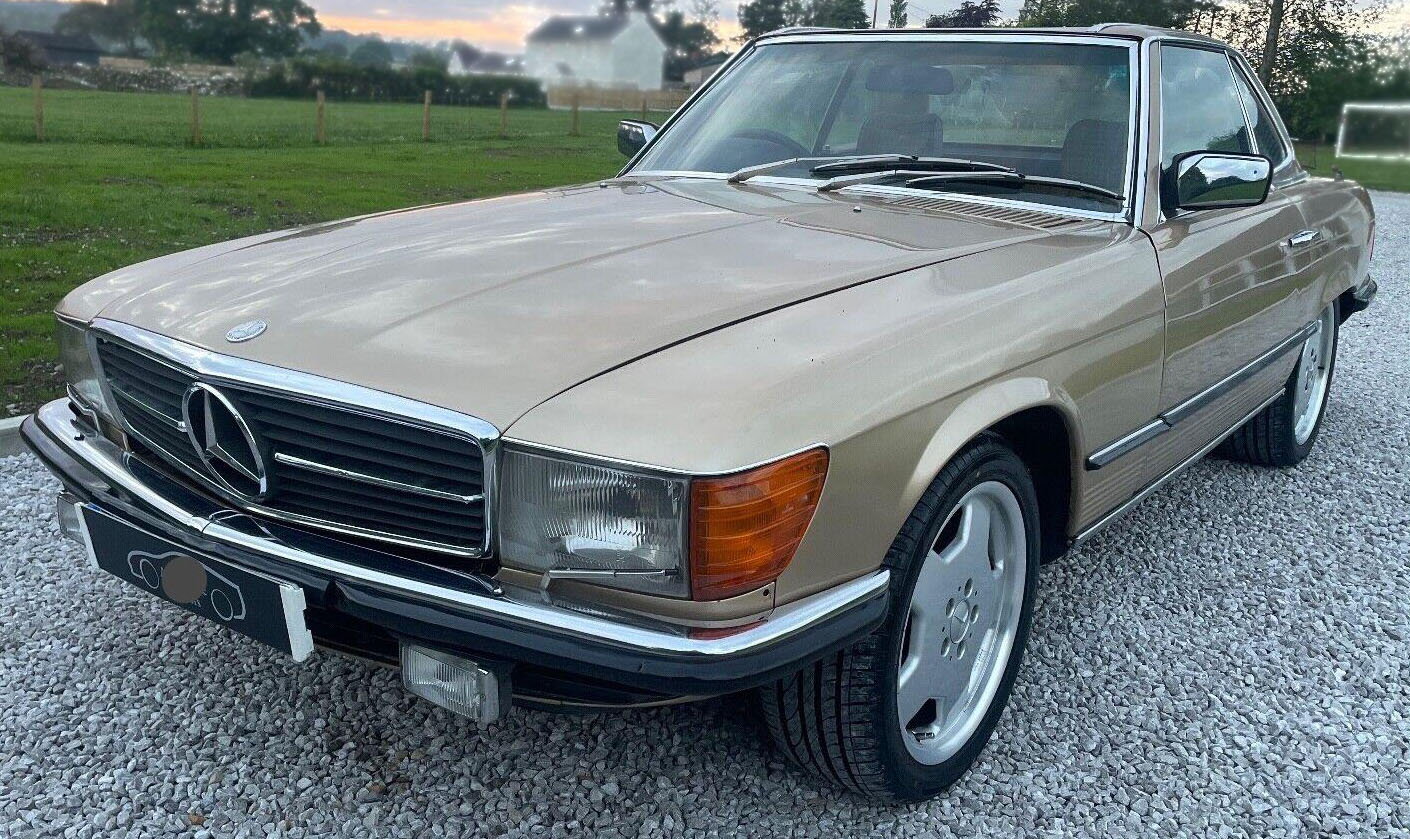
Versus similar convertibles of the era: In the mid-1980s GT convertible market, the XJ-SC’s closest rival was the Mercedes-Benz SL (R107). The Merc 380SL/500SL were competitors in price and concept (two seat luxury convertibles). Each has its pros: one UK comparison noted “if you want something more sporting, with a veneer of British civility, the XJ-SC is the better bet… the Jaguar is undoubtedly the better drive”, whereas the Mercedes offered bulletproof build and easier parts supply. The R107 is renowned for its reliability and simpler V8 engine, but it lacks the V12’s smoothness and the Jaguar’s handling finesse. The XJS is a bit more special in being a V12 and less common on the road in the UK. On the flip side, the Merc’s build quality and finish might be superior in some areas (less prone to rust, perhaps, and interiors that age well). Cost-wise, today a classic R107 SL in top shape can cost more than an XJS. For example, a late ’80s 500SL might run £30k for a good one, whereas a top XJ-SC as we mentioned is mid-20s. So the Jaguar can be seen as high performance for the money. Another contemporary was the Porsche 928 (which isn’t a convertible, but a 2+2 V8 GT of the ’80s). The 928 and XJS often get compared as two of the great ’80s grand tourers the Jag with a V12 and the Porsche with a V8. The 928 is sportier and rarer, but also costlier to maintain in some respects; the XJS has the English charm and that glorious V12 soundtrack that the smooth German V8 can’t quite match. Lastly, if you consider British peers: an Aston Martin V8 Volante of the ’80s offers similar ethos (V8 power, luxury open-top) but those are far more expensive (six-figure collector’s items now). The Jaguar is honestly a bargain by comparison you get a genuine front-engine 12-cylinder classic tourer for the price of a middling MGB restoration!
Ultimately, the 1986 Jaguar XJ-SC V12 offers a unique proposition: a convertible Jaguar V12 GT that is both accessible and distinctive. It combines “Grace, Space, Pace”, as Jaguar’s old slogan goes maybe not a true sports car, but a graceful cruiser with pace to spare and enough space for two (plus maybe some little ones or bags). Its upcoming historic status, improving market desirability, and strong parts/club support make now a great time to buy one. Just be prepared for the running costs and give it the care it deserves. In return you’ll get a magnificent sounding engine, vintage luxury, and admiring glances at every classic car meet.
With a solid example, ownership can be very rewarding. You’ll find yourself enjoying top down motoring on a warm evening, the V12 burbling away, and realise that this once “ugly duckling” Jaguar has truly become a “handsome swan” of a classic. Happy motoring!